Thirteen Hospitals Later: What Rural Georgia Taught Me About Prevention
Former Georgia State Director of Rural Health John Robitscher on the Rural Health Transformation Program and how digital prevention can reach every rural county.

Thirteen Hospitals Later: What Rural Georgia Taught Me About Prevention Nov 13, 2026 · @John W. Robitscher
Thursday, November 19, is National Rural Health Day. Every year it takes me back to the two years I spent as Georgia's State Director of Rural Health.
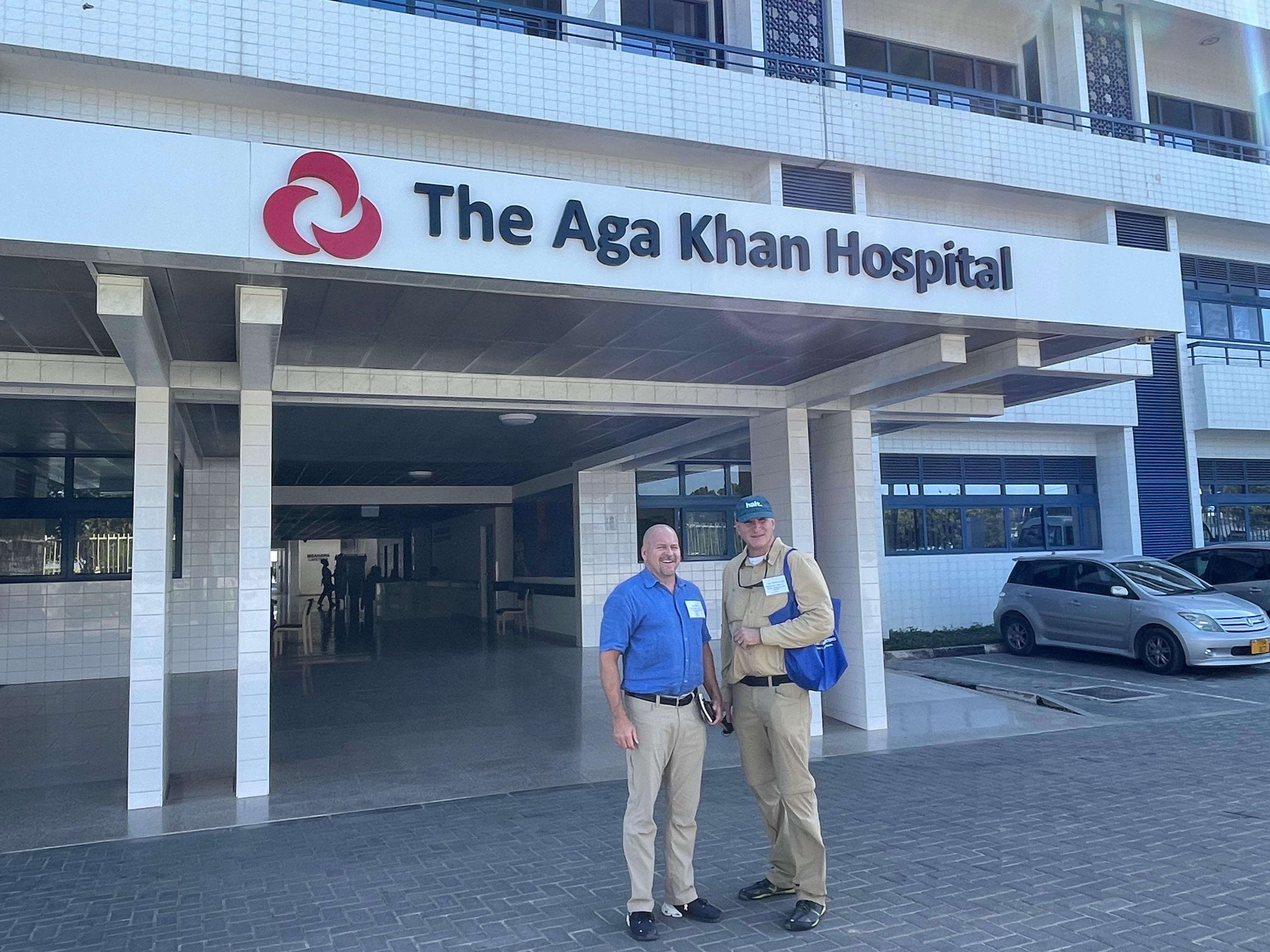
From 1998 to 2000, I led the State Office of Rural Health at the Georgia Department of Community Health. I drove to many small-town hospitals across the state. In a lot of those counties, the hospital was the only place to get care for miles. It was often one of the biggest employers in town, too.
At least 13 of the hospitals I visited have since closed or stopped admitting patients. Each was its community's anchor: Hospital Community Closed What's left Southwest Georgia Regional Medical Center Cuthbert 2020 Nothing Northridge Medical Center Commerce 2020 A nursing and rehabilitation facility North Georgia Medical Center Ellijay 2016 Urgent and emergency care only Lower Oconee Community Hospital Glenwood 2014 Nothing Charlton Memorial Hospital Folkston 2013 Nothing Stewart-Webster Hospital Richland 2013 Nothing Calhoun Memorial Hospital Arlington 2013 Outpatient and rural health clinic care Hart County Hospital Hartwell 2012 Nothing Telfair Regional Hospital McRae 2008 Nothing Source: UNC Sheps Center rural hospital closures and Georgia DCH.
In just one year, 2013, Arlington, Richland and Folkston all lost their hospitals. Three southwest and southeast Georgia communities were left a long drive from the nearest inpatient bed. Georgia county roads can seem like the longest in the world. Most are two-lane; some are red clay. None of them are fast in an emergency. I know. I have driven them all.
Those closures taught me something I've carried through every job since. A rural community can lose its hospital in a year. The chronic disease that weakened it took decades to build. If we only fund buildings and emergencies, we will keep losing both. What's changed, and what hasn't.
When a hospital closes, the need for care stays. People just drive farther for it, wait longer, or go without. Meanwhile, chronic disease keeps climbing. A JAMA Network Open study published October 28 found diagnosed diabetes among working-age adults rose from about 9% in 2018 to 10.6% in 2024. Rates ranged from about 6% in Montana to nearly 15% in Mississippi. Where you live still shapes your risk.
Rural Americans have long faced higher rates of early death from heart disease, cancer, stroke, and chronic lung disease than people in cities. Those are mostly conditions we know how to prevent or delay. The gap isn't about knowledge. It's about reach: fewer clinics, fewer specialists, longer drives, and programs built around a classroom schedule that doesn't fit farm work, shift work, or caregiving.
The danger now, however, is treating rural health as only a hospital problem. Hospitals matter enormously. But prevention has to happen in the years between hospital visits, close to where people live.
A once-in-a-generation opportunity: the Rural Health Transformation Program
This year, for the first time in a long time, rural prevention has real money behind it. The federal Rural Health Transformation Program provides states with $10 billion a year from fiscal year 2026 through 2030. On November 9, CMS and HHS announced the second year of awards, bringing the total awarded so far to $20 billion.
Georgia received $218.9 million in year one and $221.7 million for year two. The state runs its plan through GREAT Health (Georgia Rural Enhancement and Transformation of Health) at the Department of Community Health. That's the same department where I once led the State Office of Rural Health. Georgia has committed its full first-year award across 126 rural and partially rural counties. That money is going to mobile clinics, telehealth, workforce training, hospital technology, and expanded preventive care. What stands out to me is how directly the program names prevention. One of its five strategic goals is to "make rural America healthy again" by promoting preventive health and addressing the root causes of disease. Among its approved uses of funds: • Evidence-based, measurable interventions to improve prevention and chronic disease management • Consumer-facing, technology-driven solutions for the prevention and management of chronic diseases • Technology-enabled care, including remote monitoring ( I hope you will consider HALT360 a technology-driven product to improve healthy lifestyle choices. https://www.proventionhealth.org and our partner at https://www.cappahealth.com)
HHS also said year-two awards reflected state progress on policies such as the Presidential Fitness Test and nutrition education for physicians. Physical activity and nutrition are now part of how rural health progress is measured.
Why movement, food and lifestyle belong in every transformation plan
The strongest prevention tools we have are also the least glamorous: moving more, eating better, and building habits that last. The evidence keeps getting stronger. A new review in Mayo Clinic Proceedings by Drs. Glenn Gaesser and Robert Sallis found that physical activity and cardiorespiratory fitness were more strongly and consistently linked to longevity than diet quality alone. Even small increases in daily activity were tied to meaningful reductions in the risk of early death. The Physical Activity Alliance called it more reason to make physical activity a national public health priority.
Nutrition matters just as much in a different way. Many rural Georgians live far from a full-service grocery store. That makes healthy eating harder before anyone even gets to willpower. And we have proof that structured lifestyle change works. In the landmark Diabetes Prevention Program trial, a lifestyle program built on healthier eating and about 150 minutes of activity a week cut the risk of developing type 2 diabetes by 58%. That trial underpins the CDC's National Diabetes Prevention Program.
The challenge has never been the science. It's getting these programs to people in counties with no YMCA, no dietitian and no hospital.
How ProVention can help: a technology partner for prevention States, rural hospitals, and community partners don't need to build prevention technology from scratch. ProVention Health Foundation can be that partner.
Our HALT360 platform, powered by Cappa Health, puts evidence-based lifestyle programs in one app on any device. It is fully asynchronous, so participants work on their own schedule, 24 hours a day, with support from trained coaches. Partners can reach rural and underserved communities without adding staff, and they get reporting that meets CDC standards. Here's how that lines up with the Rural Health Transformation Program's approved uses:
What the program funds What ProVention offers Evidence-based prevention and chronic disease management A CDC-recognized Diabetes Prevention Program, plus Hypertension, Diabetes Self-Management Education and Support and Smoking Cessation programs Consumer-facing technology for chronic disease prevention HALT360: one app, any device, 24/7 asynchronous coaching in English, Spanish and Native American (Great Plains) languages Physical activity and lifestyle change Healthy Lifestyle and GLP-1 Lifestyle Support programs, with activity goals built in Nutrition The Mediterranean Diet program and nutrition coaching across all programs Remote monitoring and data Connections with Fitbit, Apple Health and Omron devices, and CDC-standard outcome reporting Maternal health Postpartum Care support for new parents Local workforce Coach training so community health workers and local staff can deliver programs
For a state, that means a measurable prevention program can launch across many rural counties at once without waiting on new buildings or new hires. For a rural hospital or clinic, it means patients can get prevention support between visits, from home. If your organization is planning Rural Health Transformation work, we'd welcome a conversation about partnering with ProVention. Prevention is rural infrastructure
We can't bring back the hospitals Georgia has lost. We can make sure the next generation of rural investment builds something that lasts.
That means treating prevention as permanent community infrastructure, like roads, water and broadband, not as a pilot that ends when the grant does. The Rural Health Transformation Program runs through 2030. The habits, programs and local coaches it pays for should outlast it.
On this National Rural Health Day, I'm grateful to everyone keeping rural communities healthy: the nurses, EMTs, community health workers, pharmacists, hospital leaders and state rural health offices. You are the trust that prevention is built on. Let's give you tools that reach every family, in every county, every day of the week.
• HHS: $10 billion in second year of Rural Health Transformation awards (Nov 9, 2026; Georgia FY2027 award $221,731,766) • Medicaid.gov: Rural Health Transformation Program (strategic goals and approved uses of funds) • CMS: nearly $219 million for Georgia (Oct 23, 2026) • Georgia DCH: GREAT Health awards (Jul 23, 2026; federal award $218,862,169.63) • JAMA Network Open: Diabetes Prevalence and Control Among US Adults (Oct 28, 2026) • Physical Activity Alliance statement on the Gaesser and Sallis review (Nov 12, 2026) • Mayo Clinic Proceedings review (not opened; blocked from my workspace)